Medieval shopping wasn't quite like Amazon
Your medieval delivery was finally here. Unfortunately, it had taken six weeks and arrived by donkey.
We tend to think of shopping as a fairly modern activity. You find what you want, click a button, hand over some money and wait for the familiar “Your order has shipped” email.
So where did medieval people shop?
For most people, the local market was an important part of everyday life.
Markets brought together people selling food, livestock, cloth, tools and other goods. Depending on where you lived, you might also encounter specialist craftsmen selling things they had made themselves.
A market wasn't simply a place to buy things. It was also a place to meet people, exchange news and conduct business.
And unlike a modern supermarket, you couldn't simply wander around filling a basket while carefully avoiding eye contact with the cashier.
You had to deal with actual people.
And sometimes you had to negotiate
One particularly useful skill was knowing what something was worth.
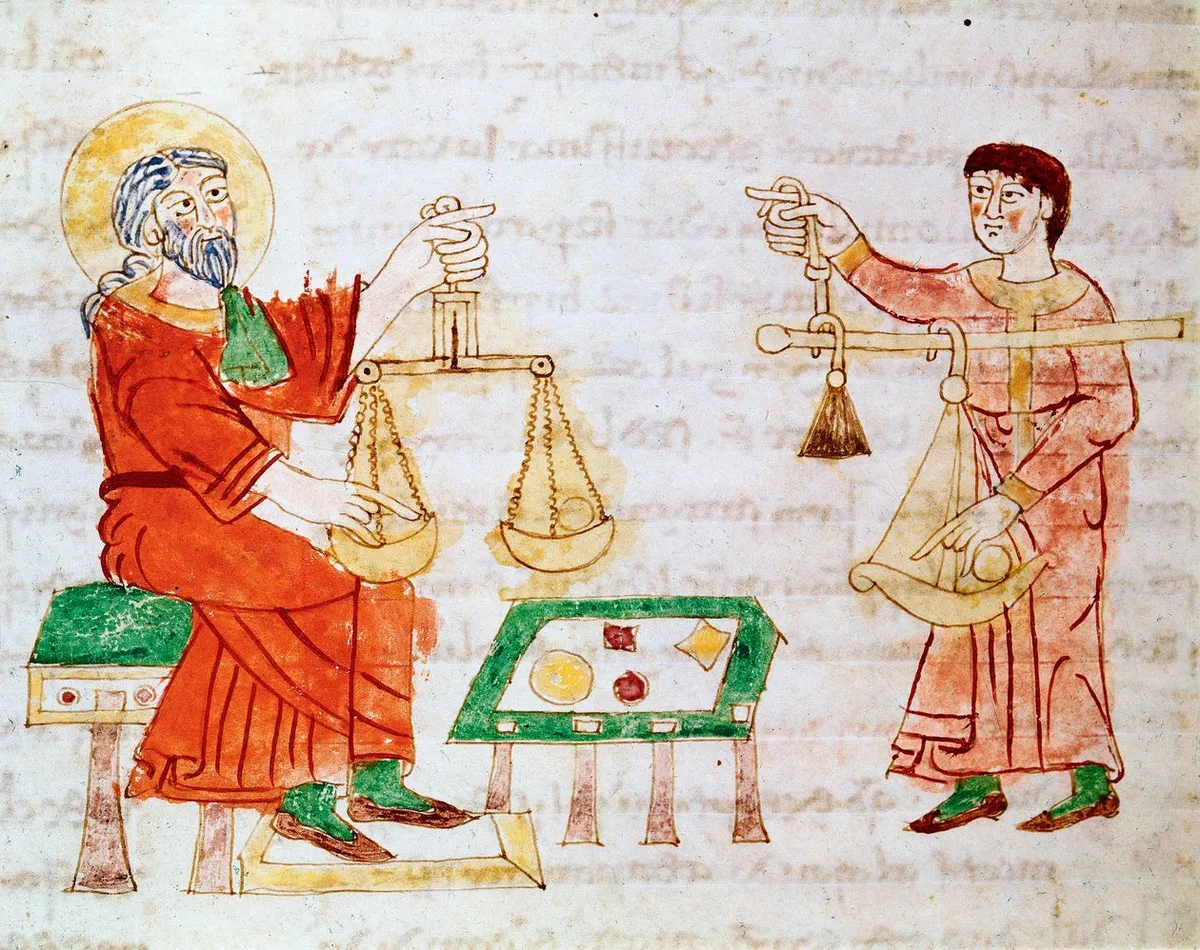
Weights and measures were an important part of medieval trade. The precise systems varied between places and periods, which could make buying and selling rather more complicated than simply looking at a price tag.
And you had to trust that you were getting what you'd paid for. Not everyone was necessarily as honest as they might have been.
It seems the art of getting a bargain — or being thoroughly fleeced — is nothing new.